 FACEBOOK
 Google
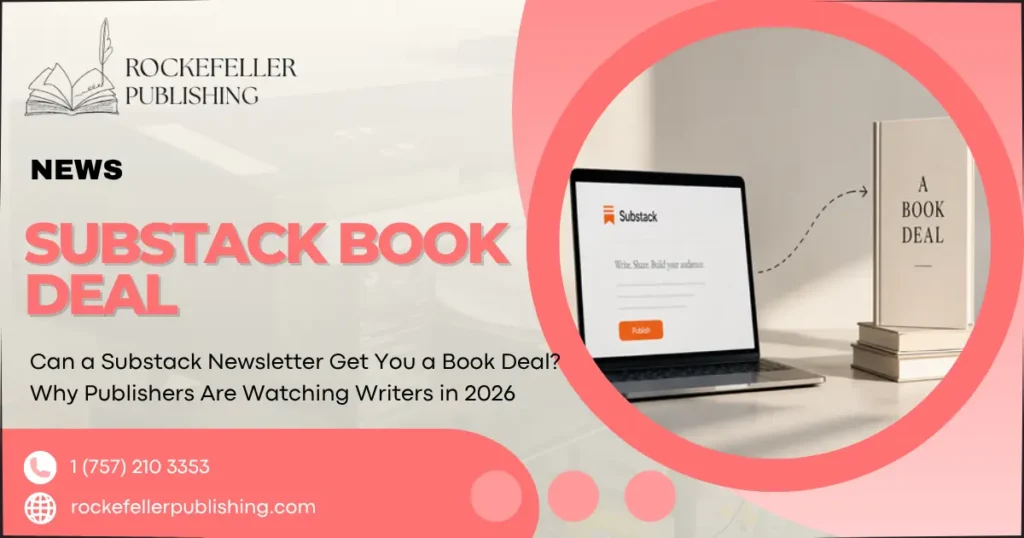
Publishers are increasingly scouting writers who already have an established newsletter audience, while Substack continues to deepen its relationships with literary agents and the wider book trade. This shift raises an obvious question for anyone building an author newsletter: can a successful Substack newsletter actually help an author land a book deal?
The short answer: a Substack book deal is possible, but it isn’t automatic. A newsletter can improve visibility and demonstrate genuine audience demand, but subscriber numbers alone do not guarantee a publishing contract. Publishers are looking at newsletters as one signal among many, not a shortcut around the fundamentals of a strong book proposal, a compelling concept, and quality writing.
This guide breaks down exactly how publishers evaluate Substack writers, what a newsletter can and cannot prove, and how to turn an author newsletter into a credible, book-ready author platform.
Key Takeaways
- Publishers are paying closer attention to writers with established newsletter audiences.
- A Substack can provide evidence of audience interest before a book is published.
- Subscriber numbers alone do not guarantee a Substack book deal.
- Reader engagement, subject expertise, and a strong book concept still matter most.
- Fiction and nonfiction authors benefit from newsletters in different ways.
- A newsletter can also support self-publishing if traditional publishing isn’t the goal.
- Authors should understand ownership and publishing rights before adapting newsletter material into a book.
Why Publishers Are Paying More Attention to Substack Writers
Publishers are looking for writers with visible, identifiable audiences, and newsletter communities are one of the clearest ways to demonstrate that. A newsletter for authors shows repeat reader interest over time, not just a single viral moment.
Substack allows writers to build direct relationships with readers, cutting out the guesswork that comes with algorithm-driven platforms. Literary agents and publishers looking for authors are paying closer attention to writers who have already built engaged communities, because a newsletter can reduce some of the uncertainty around whether readers actually care about a writer’s subject or voice.
This doesn’t mean publishers now require authors to have Substack accounts. It means an active, engaged newsletter is becoming one more piece of evidence publishers weigh when deciding whether to acquire a book alongside the manuscript, the proposal, and the market opportunity.
What Makes Substack Different From Having Social Media Followers?
This is where a Substack book deal conversation gets more nuanced than most coverage suggests.
Social Media Audience: Reach is largely controlled by algorithms and platform distribution. A writer’s message may or may not reach their own followers, depending on how the platform prioritizes content that day.
Newsletter Audience: Email gives writers a more direct relationship with readers. Once someone subscribes, the writer can reach them without depending on a third-party feed.
Substack Audience: Substack combines publishing, email distribution, subscriptions, and audience data in one place, giving writers a fuller picture of who’s reading and how they’re engaging.
The key distinction: a newsletter can function as an owned author-platform asset, while a large social following depends more heavily on third-party algorithms. That said, publishers don’t universally value newsletters over social platforms. They look at whichever channel shows real, measurable reader engagement.
A Newsletter Can Be Proof of Demand Before the Book Exists
One of the most useful things a Substack for authors does is generate real audience evidence before a writer ever pitches or publishes a book. Over time, writers often already know:
- Which subjects generate the strongest response
- Which posts readers share
- What questions come up repeatedly
- Which ideas attract paying subscribers
- What topics create sustained discussion
These signals don’t prove that a book will succeed, but they help demonstrate genuine reader interest in a concept worth calling an audience before acquisition. It describes how an author can build and understand an audience before a publisher ever decides whether to acquire the book, turning guesswork into evidence.
Does a Big Substack Audience Guarantee a Book Deal?
No. A large subscriber count is not enough on its own to secure a Substack book deal.
What still matters:
- Quality of the writing
- Strength of the book idea
- Originality
- Market size and genre
- Comparable titles
- Commercial potential and timing
- The book proposal itself
- Author credibility
- Ability to support promotion
Follower count is one data point in a much larger evaluation. A modest but highly engaged newsletter paired with a sharp, well-positioned proposal will often outperform a large but passive list attached to a weak concept.
How Many Substack Subscribers Do You Need for a Book Deal?
There is no universal subscriber threshold for a newsletter book deal. Numbers like “10,000 subscribers” are not formal requirements. They’re invented benchmarks that don’t reflect how publishers actually evaluate writers.
A smaller but highly engaged niche audience can sometimes be more meaningful than a much larger, passive list. Useful audience indicators include:
- Consistent readership
- Replies and discussion
- Subscriber growth trends
- Click activity
- Paid subscribers
- Repeat engagement
- Reader demographics, where legitimately available
- Conversions to products, events, or books
These are useful platform indicators, not formal requirements imposed by every publisher; different publishers and imprints weigh them differently.
What Publishers May Actually Learn From Your Substack
You Know Who Your Readers Are
A newsletter forces writers to understand their audience in specific, measurable terms.
Readers Return for Your Ideas
Recurring readership demonstrates sustained interest, not a one-time spike.
Your Topic Has Staying Power
Long-term engagement helps show a subject is durable rather than a passing trend.
You Can Publish Consistently
Regular publishing demonstrates discipline and reliability, qualities publishers value in authors they’ll work with over months of edits and launch prep.
You Already Communicate With Potential Readers
Direct audience access becomes genuinely useful during a book launch.
You Can Test Ideas Before Turning Them Into a Book
A newsletter functions as a controlled environment for testing themes, structures, and language before committing them to a manuscript.
Real Writers Are Already Turning Newsletter Audiences Into Book Opportunities
Recent publishing deals show that newsletter writers can attract publisher interest when they combine a distinct voice, an audience, and a book-worthy concept. But discovery is not the same as acquisition. A newsletter can make a writer easier to find, but the publisher still has to believe the proposed book works as a standalone project, not simply a repackaged newsletter archive.
Why Nonfiction Writers May Have a Particularly Clear Substack Advantage
Nonfiction proposals typically need a strong audience and market argument, and an author newsletter can supply exactly that kind of supporting evidence. A newsletter can help nonfiction writers demonstrate:
- Expertise and subject authority
- Recurring reader questions
- Market interest
- Clear positioning
- Depth of knowledge
- An established voice
This applies across categories: business, technology, culture, finance, history, wellness, professional expertise, and personal development are all areas where a consistent newsletter builds a case for book marketing for authors before the book even exists.
Can Fiction Writers Get the Same Benefit?
Fiction works differently. A fiction writer may use Substack for:
- Short stories
- Serialized fiction
- Bonus scenes
- Character material
- World-building
- Essays about writing
- Behind-the-scenes content
- Reader community
- Launch updates
Audience-building can help fiction writers build an author platform, but publishers will still evaluate the manuscript itself above all else. A large newsletter audience doesn’t substitute for a finished, compelling story.
What Should You Publish on Substack If You Want a Future Book?
Write Around the Book’s Core Problem: Focus on subjects connected to the future book without simply publishing the full manuscript.
Test Supporting Ideas: Use newsletter content to explore different angles on the same core concept.
Build Recurring Themes: Help readers understand what your publication is known for.
Develop Your Author Voice: Regular writing sharpens tone and perspective over time.
Invite Reader Questions: Reader questions often reveal areas that deserve deeper treatment in a book.
Create Content Beyond the Book: Make sure the newsletter remains valuable even after the book is published.
Do Not Turn Your Entire Future Book Into Free Newsletter Posts: Some serialization models work, but some content is better reserved for the final book. Newsletter content should support the book rather than replace it. Authors should disclose previously published material when appropriate, and publishing contracts may affect how earlier material can be reused. This is worth clarifying with a professional rather than assuming.
How to Turn a Successful Substack Into a Book Proposal
Step 1: Identify the Book-Sized Idea. A newsletter is not automatically a book. Ask: What larger promise will the book deliver that the newsletter does not?
Step 2: Define the Target Reader. Use real knowledge of your audience rather than vague assumptions.
Step 3: Identify Your Strongest Content Themes. Look for recurring reader interest, not just individual viral posts.
Step 4: Build a Distinct Book Structure. Don’t simply copy and paste newsletter archives. Create a clear progression, chapter structure, a narrative or argument, new material, and a meaningful conclusion.
Step 5: Document Your Author Platform. Useful supporting information includes subscriber growth, audience positioning, engagement, paid subscriber numbers where relevant, speaking or media activity, website traffic, social reach, and previous book sales where applicable. This is part of the same content marketing for authors‘ work that supports a book long after it is published.
Step 6: Explain Why the Book Needs to Exist. Be explicit about what readers get from the book that they can’t already get from the newsletter.
Substack Is an Author Platform, Not a Book Proposal
This distinction matters more than almost anything else in this guide. A newsletter can prove: people want to hear from you. A book proposal still has to prove: enough readers may want this specific book.
These ideas are connected, but they are not the same. Confusing them is one of the most common ways aspiring authors overestimate their readiness for a Substack book publishing deal.
What Happens If a Publisher Finds You Through Substack?
Verify Who Contacted You. Check whether the person actually works for the publisher, agency, or company they claim to represent.
Understand Who They Are. Determine whether the contact is a publisher, an editor, a literary agent, or a publishing service provider.
Do Not Rush Into Exclusivity. Take time to understand the offer before committing.
Ask What Rights They Want. Clarify exactly which publishing rights are being requested.
Understand Financial Terms. Review advances, royalties, and payment structures carefully.
Clarify Territory and Formats. Understand whether the agreement covers print, ebook, audiobook, international, or translation rights.
Ask About Newsletter-Derived Content. Determine how previously published newsletter material will be treated under the agreement.
Consider Professional Advice. For significant contracts, qualified legal or literary-agent advice may be appropriate before signing anything.
Publisher, Literary Agent or Publishing Service? Know the Difference
Traditional Publisher: A company that acquires publishing rights under a publishing agreement and manages production and distribution.
Literary Agent: A professional who represents authors in seeking and negotiating publishing opportunities.
Publishing Service Provider: A company that helps authors prepare, produce, or distribute books under a service arrangement. See this comparison of self-publishing vs. full-service publishing for how these roles differ in practice.
An email saying “we want to publish your book” can mean very different things depending on who’s making the offer, so identifying which of these three categories you’re dealing with should be the first step.
Traditional Book Deal vs Self-Publishing: What If You Already Have an Audience?
| Factor | Traditional Publishing | Self-Publishing |
| Publishing control | Shared under contract | Primarily author-controlled |
| Speed | Usually slower | Usually faster |
| Upfront investment | Publisher may provide an advance | Author often funds production |
| Distribution | Publisher network | Platform/distributor dependent |
| Marketing | Shared responsibility | Primarily author-led |
| Existing audience | Valuable | Directly monetizable |
| Rights | Licensed under contract | Usually retained by author |
| Production decisions | Publisher-led | Author-led |
Neither model is universally better; the right choice depends on how much control, speed, and shared risk an author wants.
A Substack Audience Can Make Self-Publishing More Powerful Too
An existing newsletter audience can support independent publishing just as well as it supports a traditional deal. Possible uses include:
- Cover reveals and preorders
- Launch teams and ARC recruitment
- Amazon launches and direct sales
- Audiobook and backlist promotion
- Reader reviews and repeat launches
This matters because most self-published authors struggle to sell books precisely due to a lack of audience and marketing strategy. A newsletter built ahead of launch directly addresses that gap. Traditional publishing isn’t the only worthwhile outcome for a writer who has built a genuine readership.
Should You Build an Audience Before Writing the Book?
It can help, but it isn’t mandatory. Writers can develop a manuscript and audience at the same time. For nonfiction experts, audience building may reasonably begin before the manuscript exists. For fiction writers, completing a strong manuscript typically remains the more important priority, with audience-building running alongside it rather than ahead of it.
7 Mistakes Authors Make When Using Substack to Attract Publishing Interest
- Chasing subscriber count instead of reader fit
- Writing about too many unrelated topics
- Turning every newsletter into a sales pitch
- Publishing the entire future book for free
- Ignoring reader engagement
- Having no clear author positioning
- Assuming a large audience guarantees a publishing contract
A 90-Day Substack Strategy for Aspiring Authors
Days 1–30: Find the Reader. Define your subject and reader, establish recurring content themes, and begin publishing consistently.
Days 31–60: Test the Book Idea. Explore two or three core concepts, monitor reader questions, identify recurring areas of interest, and test positioning and messaging.
Days 61–90: Build the Book Bridge. Define the book promise, create an early chapter structure, save useful audience evidence, prepare an author-platform summary, and decide whether traditional publishing or self-publishing fits your goals.
When Substack Should Not Be Your Main Strategy
Substack may not deserve heavy investment when:
- Your target audience isn’t there
- Your content works better through visual or video platforms
- Maintaining the newsletter prevents you from completing the book
- The publication has no clear topic
- You’re only using Substack because it’s currently attracting publisher attention
The goal isn’t simply to build a Substack. The goal is to build a relationship with the people most likely to care about your work, and that relationship can be built through several different channels of digital marketing for authors, not just one platform.
What Publishers’ Interest in Substack Really Tells Authors
Publishers don’t require Substack. A more accurate takeaway is that direct reader relationships are becoming increasingly valuable publishing assets, and Substack is one method of building that relationship not the only one.
Final Takeaway: Build Readers, Not Just Followers
A newsletter can improve discoverability, demonstrate reader interest, help test ideas, support book launches, and strengthen an author platform. It cannot replace a strong manuscript, a strong book concept, professional editing, clear positioning, or a sound publishing strategy. For writers thinking beyond the newsletter itself, learning how to turn a book into a long-term marketing asset or exploring paths like publishing an eBook on Amazon can help extend that platform well past launch day.
The most durable strategy combines both: strong work and a meaningful reader relationship, built together rather than one at the expense of the other.
Frequently Asked Questions
Can Substack help you get a book deal?
Yes, a Substack can help by demonstrating audience interest and writing consistency to publishers, but it does not guarantee a book deal on its own. The manuscript and proposal still have to hold up.
Do publishers look for authors on Substack?
Some publishers and literary agents do monitor newsletters with engaged audiences, but this is one discovery channel among many, not a requirement for getting published.
How many Substack subscribers do you need for a book deal?
There is no fixed subscriber number required for a book deal; engagement, growth trends, and audience fit typically matter more than raw subscriber count.
Do publishers care about an author’s audience?
Yes, publishers generally consider an author’s existing audience as part of evaluating a book’s commercial potential, alongside the writing and the concept itself.
Is Substack good for authors?
Substack can be a useful tool for authors who want to build a direct reader relationship, test book ideas, and demonstrate audience demand ahead of a pitch or launch.
Can I turn my Substack posts into a book?
You can adapt newsletter material into a book, but a book typically needs new structure, added material, and a distinct narrative arc rather than a direct republishing of past posts.
Should I start a Substack before writing a book?
It can help, especially for nonfiction writers building a market case, but it isn’t mandatory. Many authors build their audience and manuscript in parallel.
Is Substack better for traditional publishing or self-publishing?
A newsletter audience can support either path; it strengthens a traditional book proposal and also directly powers a self-publishing launch through preorders, reviews, and launch teams.
What’s the difference between a newsletter book deal and a standard book deal?
There isn’t a separate category called a newsletter book deal. It’s a standard publishing contract where the author’s newsletter happens to be part of the platform evidence supporting the deal.
Can a niche newsletter with few subscribers still attract publisher interest?
Yes, a small but highly engaged niche newsletter can sometimes be more persuasive to publishers than a much larger, passive subscriber list, particularly for specialized nonfiction topics.