
 FACEBOOK
 Google

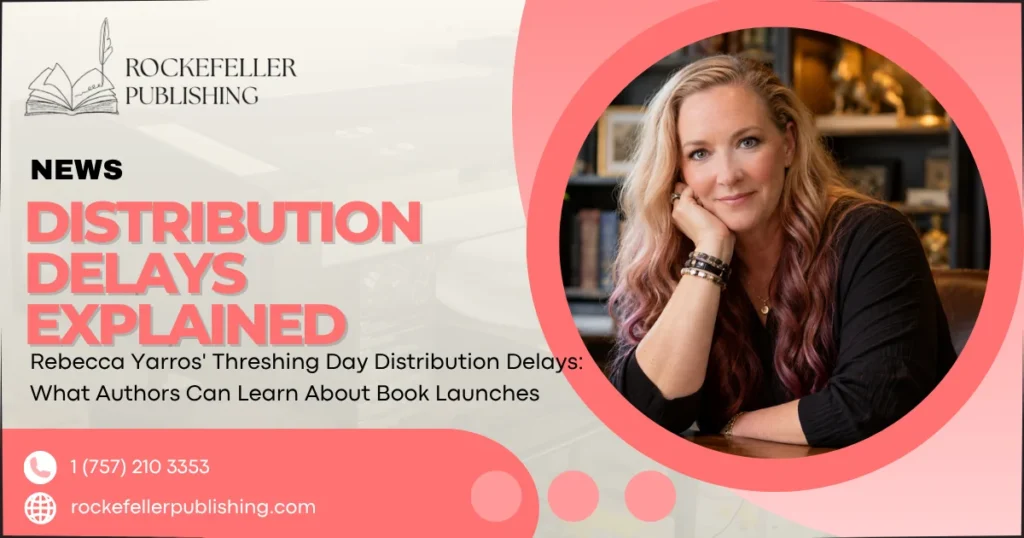
Rebecca Yarros Threshing Day distribution delays became a launch-day concern after some independent bookstores reportedly did not receive expected orders in time for the September 29, 2026 release. But some independent bookstores reportedly did not receive their expected orders in time. Publisher Little, Brown apologized to affected booksellers. The situation shows that a publication date doesn’t guarantee every retailer has stock, a distinction that matters for traditionally published and self-published authors alike.
Rebecca Yarros fans expected a smooth launch day. Instead, some independent bookstores were still waiting on copies of Threshing Day when the book officially became available on September 29, 2026. Little, Brown apologized to the affected shops after reports surfaced that expected orders hadn’t arrived in time for release.
This isn’t just a story about one author’s book launch. It points to a part of publishing that rarely gets attention until something goes wrong: writing, editing and announcing a book only gets you partway there. The physical copy still has to travel through a distribution and fulfillment system before a reader can pick it up from their favorite store.
Key Takeaways
- Threshing Day officially became available on September 29, 2026.
- It’s an Empyrean companion collection containing 13 stories, not the fourth main novel.
- Little, Brown apologized after some independent bookstores had not received their orders on time.
- A publication date does not guarantee every retailer has physical inventory.
- Distribution, wholesale availability and actual bookstore stocking are three separate stages.
- Independent authors should confirm their distribution setup well before launch day.
- Making a book available through a distributor does not guarantee an individual bookstore will stock it, a point Amazon KDP’s own Expanded Distribution rules make explicit.
What Happened With Rebecca Yarros’ Threshing Day Launch?
Here’s what’s confirmed so far. Threshing Day was published on September 29, 2026, through Little, Brown in the UK market, as referenced in current reporting. Some independent bookstores missed orders they expected to have in hand by publication day. Little, Brown apologized to the booksellers affected.
What isn’t confirmed is the cause. This could involve printing, warehousing, transport, retailer allocation or something else entirely. No reliable source has pinned down the exact reason so that this article won’t speculate. That restraint matters for accuracy, and it’s also just good practice when reporting on a developing story.
What Is Threshing Day by Rebecca Yarros?
Threshing Day sits within the Empyrean world and brings together thirteen Empyrean stories built around the series’ Threshing Day tradition. Rebecca Yarros’ official site lists it as an Empyrean “Secret Project” filed under fantasy romance and romance.
Is Threshing Day Fourth Wing Book 4?
No. Threshing Day is a companion collection, not the fourth main Empyrean novel. If you’re searching for Fourth Wing book 4, this isn’t it. This distinction matters because it shapes reader expectations and search intent for anyone typing “Fourth Wing new book” into Google.
Why Distribution Problems Matter More on a Major Release Day
High demand makes launch-day execution far more visible. Readers expect preorders to arrive on time, bookstores to have inventory ready, release-event copies stacked and waiting, retailer availability across formats, and consistent publication dates across markets.
When copies aren’t available, the fallout can include frustrated customers, canceled purchases, lost impulse sales, bookstore complaints, disrupted launch events and stalled momentum right when a book needs it most. To be clear, this article isn’t claiming all of these things happened with Threshing Day. These are general risks that any high-demand release faces, and they’re worth understanding regardless of the specific cause behind this particular story.
Published Does Not Mean Stocked
This distinction is one every author, traditional or independent, needs to internalize.
Published means the book has officially entered the market. Available to order means retailers can potentially obtain the title through a distributor or wholesaler. Physically stocked means a specific bookstore actually has copies sitting on its shelves or in its warehouse.
These three stages are not interchangeable. Amazon itself states that its Expanded Distribution doesn’t guarantee that bookstores and libraries will order an eligible paperback, even once it’s enrolled and available. Enrollment opens a door. It doesn’t walk the book through it.
How Does Book Distribution Actually Work?
The basic flow looks like this: Publisher → Printer → Distributor/Wholesaler → Retailer → Reader. The exact chain varies depending on the publishing route.
Publisher
Prepares the title, metadata, pricing and overall publication strategy.
Printer
Produces the physical copies, whether through offset printing or print-on-demand.
Distributor or Wholesaler
Makes titles available to booksellers and manages the ordering infrastructure that retailers rely on.
Bookstore
Chooses which titles to stock and decides how many copies to order.
Reader
Purchases the book through whichever retail channel they prefer.
IngramSpark explains that wholesalers make titles available to retailers, but availability alone doesn’t mean a bookstore will actually stock the book. Distribution opens the channel. It doesn’t force a purchase order.
Why Independent Bookstores Depend on Distribution Infrastructure
Independent booksellers typically can’t manage separate ordering arrangements with every author or publisher they work with. Instead, they lean on established wholesale and distribution systems that simplify ordering, invoicing, returns, inventory management, fulfillment and title discovery.
IngramSpark’s current bookseller distribution requirements note that established distribution makes it easier for booksellers to order titles through systems they already use daily. This is exactly why the Threshing Day situation carries weight beyond one author’s launch. It highlights how dependent the entire indie bookstore ecosystem is on distribution running smoothly.
High Demand Can Make Distribution Weaknesses More Visible
Big demand is obviously a good problem to have, but it also puts pressure on print quantities, warehouse allocation, bookstore orders, preorder fulfillment, replenishment schedules and delivery timing.
Threshing Day serves as the news hook for this conversation, but again, there’s no confirmed link between demand and the reported delays. The broader point stands regardless: a successful launch creates a logistics challenge right alongside the marketing opportunity it generates.
Preorders Are Not Just a Marketing Metric
Authors often use preorders to build anticipation, secure early sales and give publishers or retailers an indication of demand. All true, but preorders also give publishers and retailers a clearer picture of expected demand.
That data can support inventory planning, print run decisions, retailer allocation, launch event preparation and broader demand forecasting. Preorders help, but they don’t guarantee perfect inventory forecasting. Surprises still happen, as any launch-day hiccup demonstrates.
Why Metadata Cannot Fix a Physical Distribution Problem
Authors sometimes confuse two very different concepts: metadata and distribution.
Strong metadata improves retailer discovery, catalog accuracy, search visibility, ISBN matching and general title information. What metadata cannot do is physically move a book from a warehouse to a bookstore shelf.
Here’s the cleanest way to think about it: metadata gets the title into the system, distribution gets the book into the channel, and fulfillment gets the actual copy into a reader’s hands. Fixing one doesn’t fix the others.
Distribution vs Fulfillment: What Is the Difference?
Distribution is the infrastructure that makes a book available across sales channels. Fulfillment is the process of processing, packing and delivering an actual order.
A book can have excellent distribution coverage and still run into a fulfillment problem at a specific moment, at a specific warehouse, for a specific batch of orders. That’s a useful lens for understanding the Threshing Day news without oversimplifying what may have gone wrong.
What Self-Published Authors Can Learn From the Threshing Day Launch
This is where the lessons get practical for independent authors.
Uploading to Amazon Is Not a Complete Distribution Strategy
Amazon KDP makes books available directly through Amazon and offers Expanded Distribution for eligible paperbacks, but Amazon is explicit that bookstore ordering isn’t guaranteed. If your entire strategy is “upload and wait,” you’re skipping several steps that matter.
Choose Distribution Before Launch Month
Don’t wait until release week to sort out how readers will actually get your book. Distribution decisions need runway.
Understand Where Readers Will Buy
Think through every channel: Amazon, Barnes & Noble, independent bookstores, libraries, online retailers and direct author sales.
Verify Retailer Availability
Search for your own listings like a customer would, rather than assuming your setup is working just because you completed the paperwork.
Order Proof and Author Copies Early
Don’t depend on launch-week turnaround for physical copies you’ll need for events or personal sales.
Amazon KDP vs Wider Bookstore Distribution
|
Factor |
Amazon KDP Direct |
Wider Distribution |
|
Amazon availability |
Strong |
Usually possible |
|
Independent bookstore access |
Limited/direct varies |
Broader potential |
|
Print-on-demand |
Yes |
Often |
|
Retailer ordering |
Amazon-centric |
Multi-retailer |
|
Bookstore stocking guaranteed |
No |
No |
|
Libraries |
Expanded options |
Wider distributor access |
|
Inventory required |
Usually no |
Depends on model |
Neither option is universally better. The right choice depends on where your readers actually shop and how much retail reach your launch needs.
Where IngramSpark Fits Into Bookstore Distribution
Authors often hear about IngramSpark when they’re trying to reach bookstores beyond Amazon. IngramSpark currently states that its distribution network makes indie titles available to more than 45,000 retailers, libraries, schools and e-commerce companies, including major chains and independent bookstores.
That said, available doesn’t mean automatically stocked. Bookstores still make individual purchasing decisions for every title, no matter how wide the distribution network is. This distinction prevents authors from assuming a distribution account alone will get their book on shelves.
Wholesale Discount and Returns Matter to Bookstores
IngramSpark’s current bookstore guidance notes that booksellers typically prefer established distributor availability, competitive wholesale terms, returnable books and professional production standards. These factors shape whether a store even considers ordering a title in the first place, well before demand or marketing enters the picture.
What Authors Should Check 30 Days Before Launch
- Confirm final files.
- Confirm ISBN and metadata.
- Confirm publication date.
- Check retailer listings.
- Order proof copies.
- Verify distributor status.
- Check bookstore ordering availability.
- Prepare author copies.
- Confirm launch-event inventory.
- Prepare a backup plan.
What Authors Should Check 7 Days Before Launch
At this stage, verify: Amazon listing, other retailer listings, price, formats, stock status, preorder links, launch-event copies, links on your author website, newsletter links and social media links. The goal here is catching errors while there’s still time to fix them.
What Happens if Your Book Is Not Available on Launch Day?
Start by confirming the scope. Is it one retailer, or every retailer? Check your distribution dashboard, verify metadata and publication date, then contact the distributor directly. If it’s a specific retailer issue, reach out to them too.
Communicate clearly with readers and offer alternative legitimate purchase options in the meantime. Avoid changing multiple systems blindly. An isolated retail listing problem shouldn’t trigger a full republishing workflow without proper diagnosis first.
Should Authors Delay a Launch if Distribution Is Not Ready?
Sometimes, but not automatically. Consider the number of affected channels, existing preorder commitments, scheduled launch events, print inventory on hand, marketing commitments already in motion, and whether digital formats remain available as a fallback.
There’s no universal rule here. The central lesson is simpler: a coordinated launch should prioritize reader access over hitting a specific date on the calendar.
Book Marketing Cannot Replace Book Availability.
This is one of the most important insights for independent authors to sit with. You can have viral content, paid advertising, influencer mentions, email campaigns and strong preorder interest, but if readers can’t actually obtain your book, that demand never converts into sales.
A simple way to frame it: Visibility + Availability + Conversion = Stronger Launch Potential. It’s not a formal industry equation, just a useful way to spot where your launch might be leaking potential sales, an idea also explored in why self-published authors struggle to sell books even with strong marketing behind them.
The Book Launch Readiness Test
Ask yourself these questions honestly:
- Can readers find the book?
- Can retailers order it?
- Are physical copies ready?
- Are all formats live?
- Are prices correct?
- Is metadata consistent?
- Are preorder customers covered?
- Are event copies confirmed?
- Are backup purchase links available?
If several of your answers are no, your launch infrastructure needs attention before you go further into marketing spend.
What the Threshing Day Story Really Teaches Authors
The important lesson here isn’t that distribution problems are unique to self-publishing. They can affect major releases with full publisher support behind them too. The real difference often comes down to the scale of infrastructure available to respond when something goes wrong.
For independent authors working with fewer resources, that makes planning even more important, not less. A successful book launch is not one moment. It’s the coordination of publishing, distribution, fulfillment, retail availability and marketing, all moving together.
Final Takeaway: Getting Published Is Only Half the Journey
A manuscript can be complete. The book can be officially published. The marketing campaign can be fully loaded and ready to fire. But the launch isn’t truly finished until readers can reliably get the book through the channels where they expect to find it.
Authors should think about distribution while planning publication, not after the launch announcement has already gone live. If you’re working through your own publishing and distribution plan, whether you’re heading toward Amazon, wider retail or a hybrid path, building that plan early gives your launch day a real shot at going smoothly.
Frequently Asked Questions
What happened with Rebecca Yarros Threshing Day launch?
No reliable source has confirmed the cause of the reported delays. In book distribution generally, delays can result from printing, warehousing, transport, allocation or retailer-side logistics, but it would be speculative to attribute any one of these causes to Threshing Day without further reporting.
Is Threshing Day Fourth Wing Book 4?
No. Threshing Day is a companion collection of 13 Empyrean stories, not the fourth main novel in the Empyrean series.
When was Threshing Day released?
Threshing Day was released on September 29, 2026.
What is book distribution?
Book distribution is the infrastructure and process that makes a published book available for retailers, libraries and other sellers to order and stock.
How do authors get books into bookstores?
Authors typically work through a distributor or wholesaler, such as IngramSpark, which makes their titles available for bookstores to order. Actual stocking still depends on each store’s purchasing decision.
Does Amazon KDP distribute books to bookstores?
Amazon KDP offers Expanded Distribution for eligible paperbacks, making them available for bookstores and libraries to order. Amazon explicitly states this doesn’t guarantee that any individual retailer will place an order.
Does IngramSpark guarantee bookstore placement?
No. IngramSpark makes titles available to a wide retailer and library network, but each bookstore still decides independently whether to order and stock a given title.
What causes book distribution delays?
Delays can stem from printing schedules, warehouse allocation, transport logistics, retailer ordering timing or a combination of these factors. Specific causes vary by situation and aren’t always publicly confirmed.
How early should authors prepare distribution before launch?
Authors should confirm their distribution setup at least 30 days before launch, with a follow-up check about 7 days before release to catch any last-minute listing or inventory issues.