 FACEBOOK
 Google
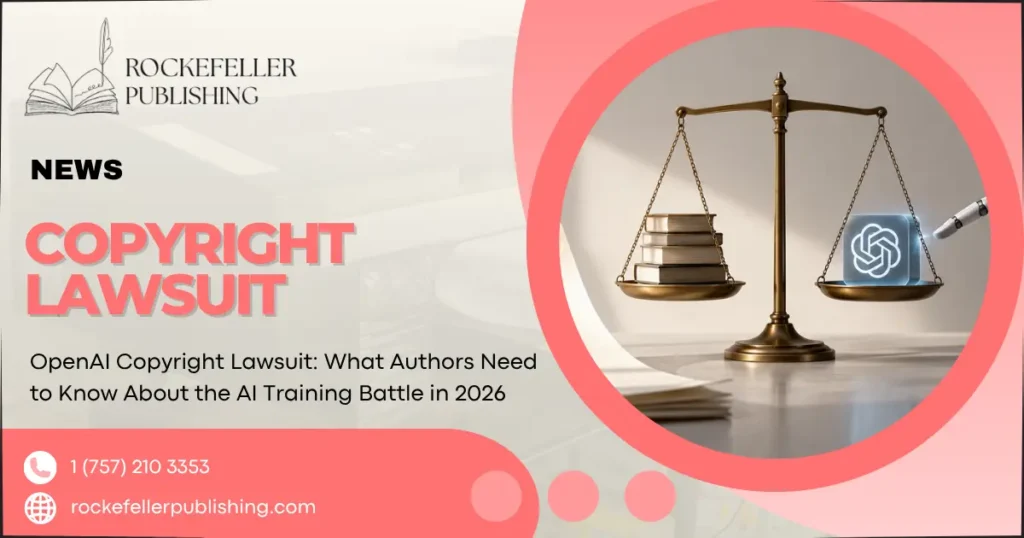
The OpenAI copyright lawsuit entered a critical new phase in September 2026, when the Authors Guild and a group of author plaintiffs moved for summary judgment against OpenAI and Microsoft. OpenAI and Microsoft have since submitted their own competing motions. At the center of this OpenAI authors lawsuit is a dispute over whether copyrighted books were used without authorization to train commercial AI systems, and whether that use is protected by fair use.
The outcome matters well beyond the handful of famous authors named as plaintiffs, because it could shape how copyrighted books are used to develop AI systems in the future.
The litigation is currently centralized in the Southern District of New York as In re OpenAI, Inc. Copyright Infringement Litigation, MDL No. 25-md-3143.
Key Takeaways
- Authors are challenging OpenAI and Microsoft’s alleged use of copyrighted books in AI development.
- Both sides have asked the court for summary judgment in this OpenAI-Microsoft copyright lawsuit.
- Authors argue their books were copied without authorization; OpenAI and Microsoft say fair-use principles protect their conduct.
- The court has not yet issued a final merits ruling establishing that OpenAI’s book-training practices were unlawful.
- This dispute is legally distinct from Anthropic’s $1.5 billion copyright settlement.
- The outcome could influence future relationships among authors, publishers, AI developers, and licensing businesses.
What Is the OpenAI Copyright Lawsuit About?
The OpenAI copyright case is part of broader, consolidated litigation that combines copyright disputes involving authors and news organizations against OpenAI and Microsoft. For the author-focused portion of the case, plaintiffs allege that copyrighted books were copied without authorization in connection with training OpenAI’s AI models, including the models behind ChatGPT.
This is why the dispute is sometimes referred to as the ChatGPT copyright lawsuit: the underlying claims concern the data used to build and improve OpenAI’s generative AI systems.
Who Are the Authors Involved?
The consolidated author case includes the Authors Guild and more than a dozen named writers. Recognizable plaintiffs include George R.R. Martin, John Grisham, Jodi Picoult, David Baldacci, Michael Connelly, Jonathan Franzen, and Stacy Schiff. The George R.R. Martin OpenAI lawsuit and the John Grisham OpenAI lawsuit are two of the most-searched angles of this case, largely because of their name recognition. Still, the claims apply broadly across the full group of author plaintiffs. Readers interested in the complete list of plaintiffs can consult primary court filings for full detail.
Why the OpenAI Case Reached a Critical Stage in September 2026
September 2026 marked a turning point in this litigation, as both sides asked the court to resolve key legal questions before trial.
Authors Have Asked for Summary Judgment
A summary-judgment motion asks a judge to decide legal issues without a full trial, when there is no genuine dispute over material facts. The plaintiff authors filed their motion on September 4, 2026, asking the court to rule in their favor on core questions in the case.
OpenAI and Microsoft Have Filed Their Own Motions
Neutral coverage of this case requires presenting both sides. OpenAI and Microsoft have filed their own motions asking the court to resolve the same underlying issues in their favor. Both parties are pursuing summary judgment because they believe the existing record already supports their respective positions on liability and fair use.
What Happens After Summary Judgment?
Several procedural paths remain open, and none is guaranteed:
- The judge may decide some issues while leaving others unresolved.
- Certain claims could remain contested and proceed further toward trial.
- The court may reject some arguments raised by either side.
- Disputed factual questions could require additional proceedings.
No outcome should be treated as predetermined at this stage.
What Authors Say OpenAI Did With Their Books
According to the Authors Guild, plaintiffs accuse OpenAI and Microsoft of obtaining copyrighted works without authorization, copying them in connection with AI training, and using those works to help develop commercial AI products. The plaintiffs also challenge OpenAI and Microsoft’s reliance on fair use as a legal defense.
It’s worth noting the precise language here: the plaintiffs allege these practices occurred. Because the merits remain contested and no final ruling has been issued, this article treats the claims as allegations rather than fact.
What OpenAI and Microsoft Argue in Response
OpenAI and Microsoft dispute the infringement allegations. Their central argument is that AI training can constitute transformative fair use under U.S. copyright law. Reuters has described OpenAI and Microsoft’s position as one that emphasizes transformation of the underlying material rather than substitution for the original copyrighted works.
What Does “Transformative” Mean?
A use may receive stronger fair-use protection when it serves a genuinely different purpose or function than the original work, rather than simply replacing it in the marketplace. However, transformative use is only one part of a broader fair-use analysis courts must weigh. Calling a use “transformative” does not, by itself, make that use legal.
The Real Question: Can Copyrighted Books Be Used to Train AI?
This is the heart of the AI training copyright debate, and it’s a more precise framing than simply asking whether AI is “legal.” The actual legal question is: under what circumstances can copyrighted material be copied and processed to train an AI model?
The authors’ position: Creative work should not be copied into commercial AI systems without permission or compensation.
The OpenAI/Microsoft position: AI training analyzes material in a transformative way that falls within established fair-use principles.
Reuters has described the current consolidated litigation as a major test of how fair use applies to AI training copyrighted books more broadly, which is one reason this case is being watched so closely across the publishing and technology industries.
What Is Fair Use and Why Does It Matter Here?
U.S. copyright law weighs four factors together when evaluating a fair-use defense. Courts do not decide fair use based on any single factor in isolation.
Purpose and Character of the Use
Courts examine whether the new use is transformative and whether it serves a commercial purpose.
Nature of the Copyrighted Work
Courts consider whether the original work is highly creative, primarily factual, or something in between, since creative works often receive stronger protection.
Amount of the Work Used
Courts look at how much of the copyrighted material was copied and whether that amount was necessary for the new use.
Effect on the Market
Courts assess whether the new use could substitute for, or otherwise damage, the market for the original work.
These four factors are weighed together, and this article does not attempt to predict how a court will balance them in the OpenAI litigation.
OpenAI vs Anthropic: Why These Copyright Cases Are Not the Same
It’s tempting to assume that Anthropic’s $1.5 billion copyright settlement already answers the questions raised in the OpenAI litigation. It doesn’t. Here’s how the two cases compare:
|
Issue |
Anthropic Case |
OpenAI Case |
|
Authors involved |
Yes |
Yes |
|
Copyrighted books |
Yes |
Yes |
|
AI training questioned |
Yes |
Yes |
|
Pirated-book allegations |
Yes |
Plaintiffs allege unauthorized copying/data sourcing issues |
|
Final settlement |
$1.5 billion settlement approved |
No equivalent final settlement currently. |
|
Fair-use dispute |
Court addressed training separately from pirated acquisition |
Currently being litigated. |
|
Current stage |
Settlement administration |
Summary-judgment stage |
In the Anthropic case, Judge William Alsup distinguished between AI training itself and the separate question of acquiring and retaining pirated library copies. That case later resulted in the $1.5 billion settlement now moving through claims administration.
Why Authors Should Not Assume Anthropic Already Decided OpenAI’s Case
The two cases involve different defendants, different evidentiary records, different court proceedings, and different claims at different procedural stages. A decision involving one AI company does not automatically determine the outcome for another company’s case. Authors following the OpenAI copyright lawsuit should treat it as its own legal proceeding rather than an extension of the Anthropic outcome.
Pirated Books and AI Training Are Two Different Legal Questions
This distinction, highlighted by the Anthropic ruling, has become especially important for the wider publishing industry. There are really two separate legal questions at play:
Question 1: Can an AI company lawfully use copyrighted material for training under fair use?
Question 2: Does it matter how the company obtained the underlying copy in the first place?
This second question has taken on new urgency as publishers pursue action against sites accused of feeding pirated content into AI systems, as seen in publishers taking legal action against book piracy. Provenance, not just purpose, is increasingly part of the copyright conversation.
Could ChatGPT Outputs Create a Separate Copyright Problem?
Beyond training itself, some plaintiffs have also challenged allegedly infringing outputs generated by AI models, which raises a distinct legal question from whether the training process itself infringes copyright. A federal judge previously allowed certain author claims concerning allegedly infringing outputs to proceed, without deciding the broader AI-training question at that stage.
Training Copies vs AI Outputs
Training claim: What happened when copyrighted material entered the AI-development process?
Output claim: Can generated content itself be substantially similar to protected expression from an existing book?
Understanding this distinction is essential to following the ChatGPT copyright lawsuit accurately, since training and output claims can move through the courts on separate timelines with separate legal standards.
Newly Revealed AI Documents Add Another Layer to the Copyright Debate
Recently unsealed filings in related, consolidated news-publisher litigation have brought internal OpenAI and Microsoft comments into public view, adding to the debate over whether generative AI may compete with or substitute for original content. OpenAI and Microsoft dispute the significance placed on these statements and continue to defend their legal positions.
It’s important to be precise here: this material does not establish that OpenAI admitted to copyright infringement. What can accurately be said is that plaintiffs argue the documents undermine parts of the fair-use defense. A claim that remains contested rather than settled.
What Could the OpenAI Lawsuit Mean for Authors?
Setting aside predictions about who wins, the litigation raises several practical issues worth understanding now..
AI Licensing Could Become More Important
Publishers, authors, and technology companies are increasingly debating whether licensing arrangements should play a larger role in how AI developers access high-quality copyrighted content.
Authors May Pay More Attention to Their Digital Rights
Authors should understand copyright ownership, publishing rights, digital rights, derivative rights, licensing terms, and enforcement rights as this area of law continues to develop.
Publishers May Need Better Records of Rights Ownership
This is especially true when multiple rights-holders, such as an author and a publisher, both have a stake in the same work.
What the Case Means for Self-Published Authors
Traditionally published authors often have a publisher managing some of these rights on their behalf. Self-published authors, by contrast, typically manage copyright, ISBNs, distribution, publishing accounts, contracts, manuscript files, and licensing decisions on their own. That makes careful recordkeeping particularly important, a theme also covered in understanding your publishing rights on Amazon KDP.
6 Things Authors Should Do to Protect Their Publishing Rights
These general rights-management practices won’t prevent AI training disputes on their own, but they give authors a stronger foundation:
- Keep copies of original manuscripts.
- Know who owns your copyright.
- Keep publishing contracts organized.
- Understand rights granted to publishers or service providers.
- Maintain copyright registration records where applicable.
- Monitor how your work appears online.
Does Copyright Automatically Protect an Author’s Book From AI Training?
Copyright protects original expression, but whether a particular AI-training use constitutes infringement or fair use is an unsettled, fact-dependent legal question currently being litigated in multiple cases, including the OpenAI litigation. It would be inaccurate to say that copyright automatically prevents AI companies from using a book for training.
Could Authors Eventually Get Paid When Books Train AI?
This remains a future-oriented question rather than a confirmed outcome of the OpenAI litigation. Possible industry models under discussion include direct licenses, publisher licensing agreements, collective licensing, opt-in arrangements, rights-management platforms, and revenue-sharing structures. None of these are guaranteed results of the current case; they represent directions the industry may explore regardless of how this specific litigation concludes.
Why This Case Matters Beyond OpenAI
The OpenAI copyright case could influence how the wider industry thinks about AI training data, licensing, digital publishing rights, book piracy, publisher contracts, author compensation, and machine-generated content. That influence extends into related conversations, including how AI is changing publishing operations and concerns about AI books flooding Amazon self-publishing.
That said, this case will not “set the law” for all AI disputes. Federal copyright rulings can influence future litigation, but outcomes ultimately depend on the specific facts, jurisdiction, and any later appeals.
What Authors Should Watch Next
Readers following author rights and AI developments should watch for:
- Court rulings on the pending summary-judgment motions
- How the court treats each side’s fair-use arguments
- Decisions concerning training datasets
- Rulings involving AI-generated outputs
- Any settlement negotiations between the parties
- Class certification or damages developments, where applicable
- Related AI copyright decisions in other cases
Frequently Asked Questions
Why are authors suing OpenAI?
Authors allege that OpenAI and Microsoft copied their copyrighted books without authorization to train AI models, including those behind ChatGPT, without permission or compensation.
What is the OpenAI copyright lawsuit about?
It’s consolidated litigation, In re OpenAI, Inc. Copyright Infringement Litigation (MDL No. 25-md-3143), in which authors and news organizations allege unauthorized use of copyrighted material to train OpenAI’s AI systems.
Is George R.R. Martin suing OpenAI?
Yes, George R.R. Martin is among the named plaintiffs in the consolidated author litigation against OpenAI and Microsoft.
Is John Grisham part of the OpenAI lawsuit?
Yes, John Grisham is one of more than a dozen named authors, alongside the Authors Guild, in the case against OpenAI and Microsoft.
Did OpenAI use copyrighted books to train ChatGPT?
Plaintiffs allege that OpenAI used copyrighted books without authorization to train its models. OpenAI disputes the infringement allegations, and no final court ruling has resolved this question.
Is AI training on copyrighted books fair use?
This is the central legal question in the case. OpenAI and Microsoft argue AI training is transformative fair use, while authors argue it required authorization. Courts weigh four fair-use factors together, and no final ruling has been issued.
How is the OpenAI lawsuit different from the Anthropic case?
The Anthropic case resulted in a $1.5 billion settlement after a court distinguished AI training from the separate issue of acquiring pirated books. The OpenAI case involves different defendants, different facts, and is still at the summary-judgment stage.
What could the OpenAI lawsuit mean for self-published authors?
Self-published authors, who typically manage their own copyright, contracts, and distribution accounts, may need to pay closer attention to rights documentation and licensing developments as this case and others like it unfold.
The OpenAI Case Is Really About Who Controls the Value of a Book
The deeper question raised by this litigation isn’t simply whether AI technology will continue advancing; it clearly will. It’s how copyright law treats the books and other creative works used to build commercial AI systems, and what control authors retain over the economic value of their own work.
Authors should understand ownership, contracts, copyright documentation, and distribution rights before their books enter the market. Rockefeller Publishing helps authors build that foundation from the start.