 FACEBOOK
 Google
AI Voice Theft: How Authors Lose Revenue on YouTube
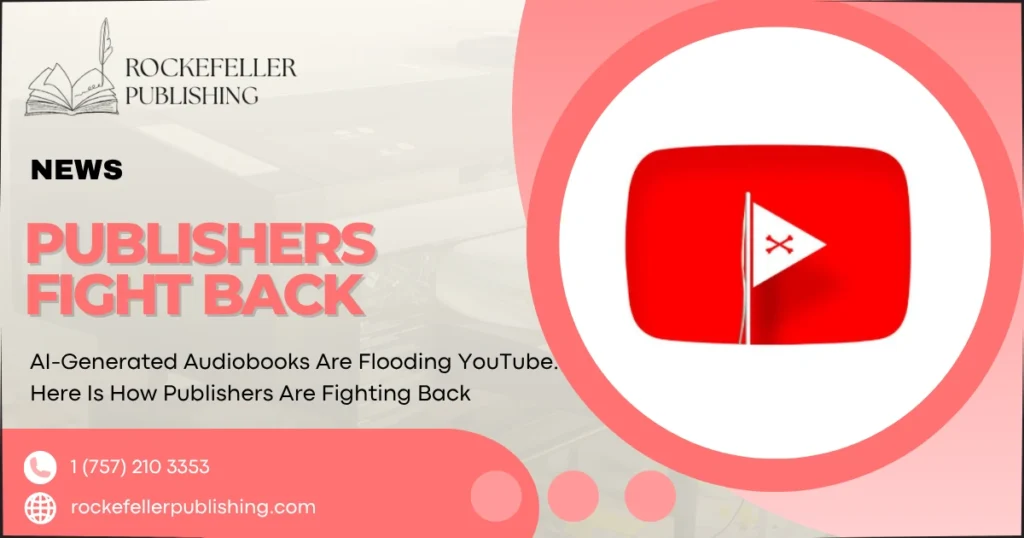
There is a quiet theft happening across one of the world’s biggest video platforms and most readers have no idea it is taking place. Bestselling novels are being read aloud by robotic AI voices, wrapped in random stock footage of beaches and waterfalls, and uploaded to YouTube without a single dollar going to the author who wrote them.
This is not a small or isolated problem anymore. It has become widespread enough that some of the biggest names in publishing are now organizing a coordinated response.
How Bad the AI Audiobook Piracy Problem Has Become
A Bestselling Author Becomes the Face of the Fight
John Grisham did not expect to spend part of his year fighting YouTube. After discovering an unauthorized version of his recent legal thriller The Widow on the platform, narrated by a flat, robotic AI voice and paired with hours of random stock footage including waterfalls and beach scenes that had nothing to do with the story, he went public with his frustration.
The pirated upload had already gained over eighty thousand views by the time it drew attention. Grisham did not hold back, criticizing both the person who uploaded it and the platform that let it stay online.
This Goes Far Beyond One Author and One Book
Grisham’s situation turned out to be far from unique. Harry Potter, the Hunger Games, and a long list of other major titles have all been found in unauthorized AI narrated form scattered across YouTube. According to industry tracking, thousands of pirated AI audiobook instances appear online within just one month of a major release, and those uploads collectively attract hundreds of thousands of streams before they are ever removed.
The people uploading this content are not doing it quietly out of curiosity. Many of these videos carry advertising, meaning the uploader earns money every time someone listens to a stolen narration of someone else’s work.
Why YouTube Has Struggled to Stop the Problem
A Detection System Built for the Wrong Kind of Content
YouTube already has a system called Content ID that automatically scans uploads to check for copyrighted material. The problem is that developers originally built this system for music and video, where it directly compares audio waveforms against a known database.
Audiobooks do not work the same way. A pirated narration uses a completely different voice reading the same text, which means the actual audio waveform never matches anything in the original recording. Even small changes like a shift in pacing or added background noise are often enough to slip past detection entirely.
Publishers Are Filing Takedowns One by One
Without a reliable automated tool, publishers and authors mostly have to search manually for infringing content and file individual takedown notices one at a time. Sites remove one video and a few more take its place soon after. It is a grind that is nearly impossible to keep up with given how fast this content spreads.
How the Publishing Industry Is Organizing a Real Response
A New Partnership Built Specifically for This Fight
The Association of American Publishers recently partnered with a technology firm called Vermillio to tackle exactly this problem. Their technology identifies and removes pirated audio from YouTube and other AI platforms creating unauthorized tracks.
The president of the association described the scale of online infringement as shocking and said the issue has to be addressed. He added that solving it requires new thinking, sophisticated tools, and strong partnerships, rather than publishers fighting the problem one at a time.
Moving From Defense to Offense
The significance of this collaboration lies in the new approach both sides are adopting. This venture aims not only to stop what has already started, but also to prevent potential infringement as soon as they detect it and minimize losses before the content spreads further in circulation.
The technology company’s leadership sees this as part of a broader shift in publishing toward proactive protection rather than reacting to issues one by one.
What This Means for Authors Right Now
Your Work Is More Vulnerable Than You Might Think
John Grisham is not exactly an unknown writer, and pirates still stole his book and turned it into ad revenue for a stranger. So if you are working on your first novel right now, do not assume nobody is paying attention to it. Pirates tend to go after whatever is getting noticed, not necessarily whatever is biggest. A book that starts picking up word of mouth, even a small amount, is already on someone’s radar somewhere.
Why Working With the Right Publishing Partner Matters
Early on, awareness of the risk puts you at a better advantage. Those who understand the risks, what their publishing agreement says regarding formats for audio books or digital forms, as well as, working for a company who considers ip a high priority will save an immense amount of trouble in the event someone decides to hack the writing in some fashion or fashion.
At Rockefeller Publishing, we help authors across the United States understand how we protect their rights. This starts the moment they publish their book. We believe every author deserves to know their work belongs to them. The income it generates also belongs to them, not to anyone trying to exploit it without permission.
Ready to create a professional audiobook that stands out? Get in touch with our team.